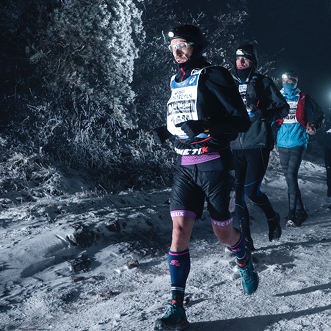
Night running: how to be well-lit for the Saintélyon
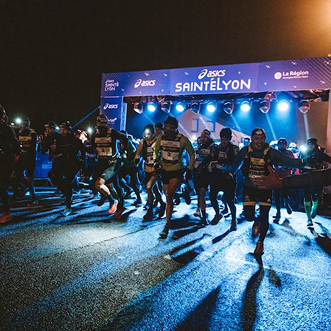
What makes the Saintélyon such a legendary race is its conditions: a start just before midnight for a whole night spent on the roads and trails of the Pilat. While physical preparation is essential, some basics of night running are also necessary. Here are all our best tips to ensure you don't arrive looking like a deer in the headlights, but rather the most prepared person on the starting line.
An experience that changes your perception
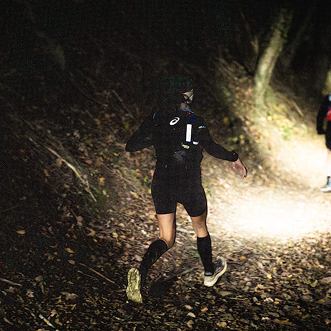
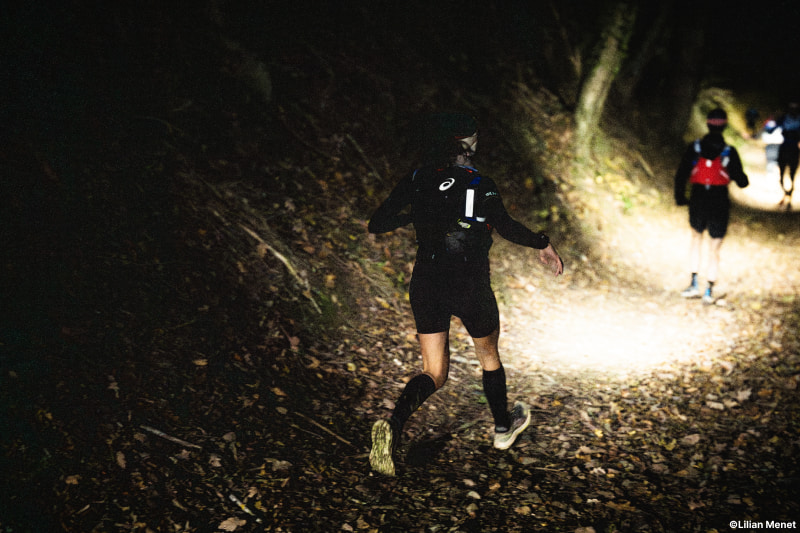
At night, your field of vision is significantly narrowed, which leads to a change in your senses while running. There are still traps to avoid, particularly those related to speed.
Indeed, at night you will often feel like you are going faster, which is exclusively due to your gaze being focused. This effect amplifies fatigue and the risk of misreading the terrain.
So, adopt the right habits : anticipate obstacles by looking far enough ahead and reduce your stride length to stay stable and focused.
Train at the right times
There’s no secret: get your body used to functioning at night. With a 23:30 start, the first few hours of the race are still done on "fresh energy".
But be careful! Dawn comes quickly, and with it, fatigue. Incorporate late sessions after work (in November, that can be from 6 pm) and a few early morning runs into your training so your body isn't caught off guard.
Choosing and using your headlamp wisely
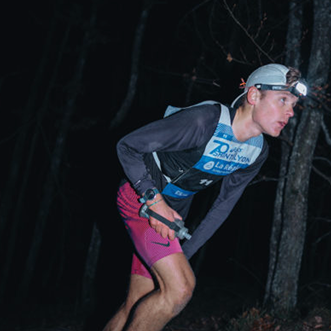
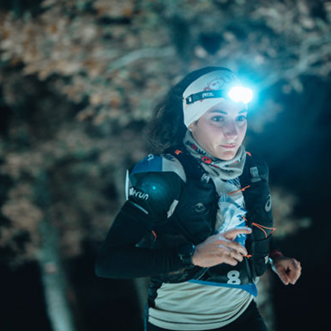
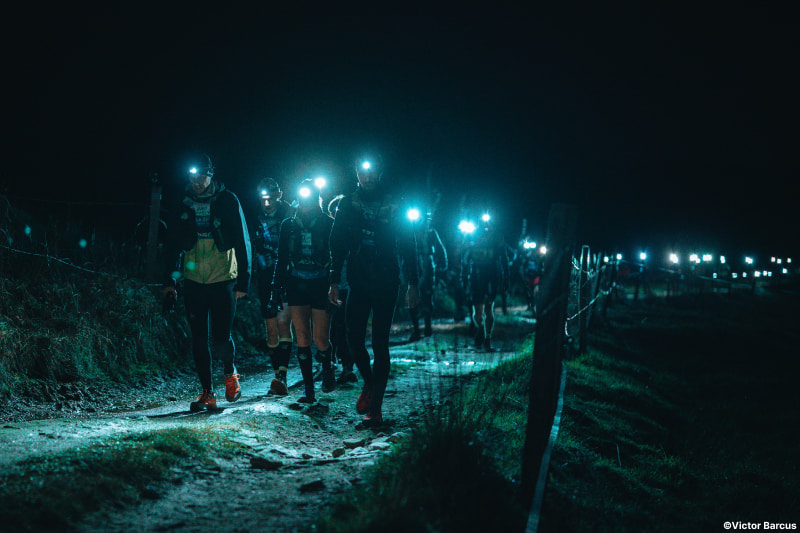
It is the key element of your night; without it, you can't start! For the SaintéLyon, opt for a lamp withat least 400 lumens, with enough battery life to last the whole night. Aim it to light up the area 2 to 10 metres in front of you, with your head held straight.
In November/December, temperatures can be very cold, and batteries discharge much faster. Always set off with a spare headlamp or a backup battery, and test both before the start.
Petzl models are particularly high-performing for these types of races, with batteries that resist harsh conditions without weighing you down unnecessarily.
We particularly recommend the Nao RL and Swift RL models, with their power exceeding 1000 lumens. The Swift RL model, meanwhile, is perfect as a spare lamp with its featherweight of 43g.
To learn more about choosing your headlamp, check out our dedicated article right here.
Manage your sleep beforehand
This is the most underestimated aspect of the SaintéLyon. Starting at 23:30 means you will need to stay awake and perform well all night. A sleep deficit will be felt quickly. In the days leading up to it, go to bed early. On the day before and the day of the race, a short 20-minute nap in the late afternoon is ideal.
Pack appropriate clothing
Part of the SaintéLyon's charm is the cold and damp conditions, which are guaranteed every single time.
The SaintéLyon takes place at the end of November. Cold and damp weather is almost guaranteed. Opt for several lightweight, breathable layers that are easy to adjust depending on your exertion levels. A waterproof windbreaker is also essential, especially in the exposed areas of the Pilat.
⚠️ Day or night: always carry a survival blanket with you in case of any issues.
The little extras that make all the difference
- Test your nutrition during a night run before the race
- Avoid overly bright white lights just before the start, as they can disrupt your circadian rhythm
- Work on your mental game: enduring the cold and darkness between 3am and 5am is something you need to prepare for
For more details on this topic, take a look at our dedicated video 👇